Support Urban Agriculture with H.R. 5804

Urban Agriculture in the 2018 Farm Bill

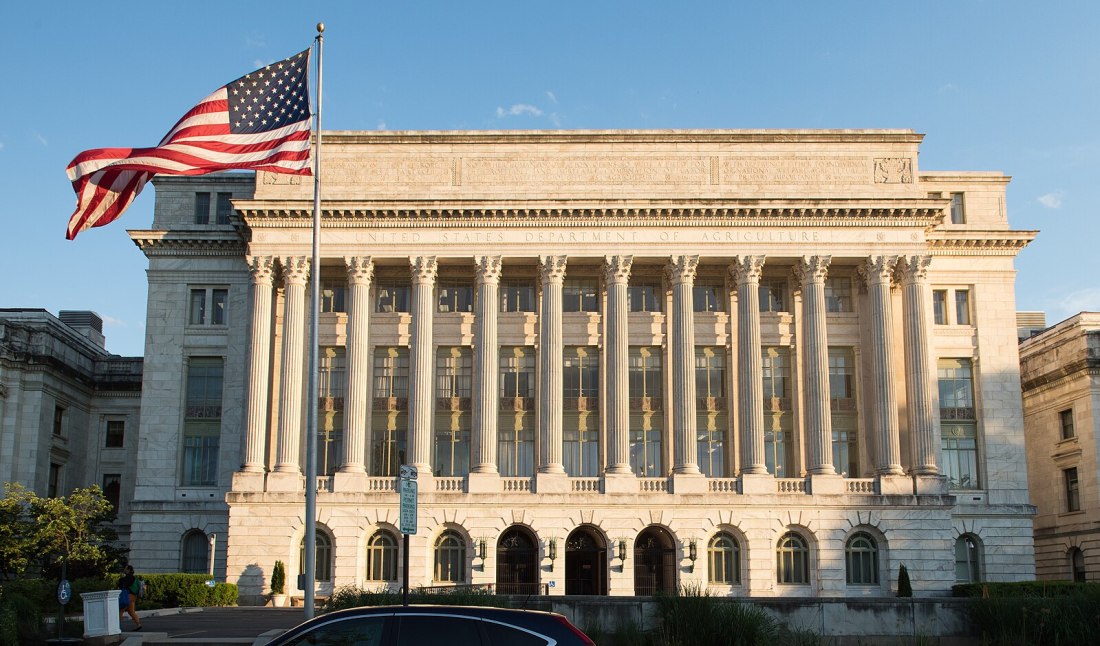
The 2018 Farm Bill took a major step forward by creating the Office of Urban Agriculture and Innovative Production (OUAIP), an advisory committee that gives the public a voice in shaping federal policy, and a pilot program for urban county committees in select cities. The law authorized up to $25 million a year through 2023 to support their work. Congress funded the program each year, but always below the $25 million cap.

The old Farm Bill expired. Now what?

The 2018 Farm Bill expired in 2023. Since then there hasn’t been a new Farm Bill, but Congress continued to fund urban ag anyway, by appropriating to an expired authorization. That’s a legal and fairly common workaround, but not ideal. It leaves the program without a recent policy mandate, which makes it more vulnerable to shifting political priorities.

Now, a new bill—H.R. 5804—would reauthorize the urban agriculture programs through 2030 and raise the funding cap to $50 million. It was introduced by Robert Menendez of New Jersey. As of this date it has five co-sponsors and a catchy name, as spelled out in the bill itself:

This Act may be cited as the “Providing Robust Organics and Diets for Urban Communities Everywhere Act” or the “PRODUCE Act”.

H.R. 5804 is a marker bill.

The bill nails down some basic issues — reauthorization and funding cap — but nothing more. In time it can be fleshed out, but the first goal of a marker bill is to flag an issue and gather allies. Most marker bills are introduced mainly to signal policy priorities, stake out a position, or influence future negotiations rather than to become law themselves. The vast majority never move out of committee or receive a floor vote.

A stronger, more detailed version of 5804 may become part of the next Farm Bill, but the first priority if this bill is to survive its time in committee and prevail in a floor vote is to build support for it now.

What Next?

Congress needs to know that there is backing for a strong urban ag presence in the Farm Bill and hence in the USDA. Here’s what I got from ChatGPT — ya, I cheat 😉

  1. Early support matters more than early detail.
    A bill with a small number of sponsors tends to vanish; one with visible bipartisan or cross-regional support gets attention.
  2. Thank-you letters and recruitment outreach help normalize the idea that this reauthorization is important and popular.
  3. Educational outreach now (to urban agriculture advocates, farm organizations, environmental groups, etc.) builds the base of people ready to speak up when the strengthening phase comes.
  4. Once support is established, policy suggestions for improvement (e.g., expanding eligible activities, providing technical assistance, ensuring stable funding mechanisms) will carry more weight.

And how do we do that? More from ChatGPT:

  1. Letters of appreciation to the sponsor and current co-sponsors.
  2. Outreach to potential co-sponsors, especially members on the House and Senate Agriculture Committees.
  3. Educational briefings or one-pagers explaining why urban agriculture needs a reauthorized and improved OUAIP.
  4. Build a network of endorsers—local governments, nonprofits, and farm organizations willing to sign a support letter later.
  5. Begin drafting recommendations for what a “strengthened” version would include, but hold them until the bill gains traction or heads to markup.

Join the Discussion on Urban Agriculture Recommendations

At its September 17 meeting, the Urban Agriculture and Innovative Production Advisory Committee introduced five new recommendations to support urban agriculture. The Committee will revisit them—and may even vote—at its next meeting on September 24.

This is a key moment to make your voice heard. Your input can help shape national policy for urban agriculture. You can share your perspective by emailing the Committee, and in some cases you may also have the chance to give a brief comment during the meeting itself.

Details on how to register, attend online, and submit comments or questions are available in the Federal Register.


Proposed Recommendation #1

Establish a discretionary and permanent federal advisory committee for urban agriculture and innovative production.


Proposed Recommendation #2

Release a Notice of Funding Opportunity (NOFO) for Urban Agriculture and Innovative Production Grants for Fiscal Year 2025


Proposed Recommendation #3

Authorize the Farm Service Agency (FSA) Urban/Suburban County Committee (UCOC) program to be permanent instead of a pilot project and adjust responsibilities of the program to better match existing County Committees.

  • The current list of 27 cities should have full and active UCOCs. The committees are made up of three to 11 members who serve three-year terms.
  • Resources to support the operations and activities of UCOCs should be provided by FSA.
  • Collaboration and engagement with local FSA Urban Service Center staff should be supported by FSA and NRCS.

Proposed Recommendation #4

Integrate dedicated USDA staff with specialized technical expertise in the USDA Urban Service Centers where the Urban County Committees (UCOC) are, to improve technical assistance, outreach, and opportunities relevant to urban agriculture and innovation producers/growers.

  • Staff should make joint site visits to urban farms with other FSA and NRCS Service Center representatives to provide specific guidance on indoor or other emerging production practices.
  • Staff should provide specific guidance to eligible urban farmer entities to help them better apply for FSA and NRCS programs such as establishing a farm record and applying for program support.
  • Solidify engagement with staff and UCOC Board Committees to gather insight and feedback on needed modifications to FSA and NRCS program eligibility guidelines and resources in the service centers to better serve the breadth of urban agriculture and innovative growers and producers.
  • Solidify formal partnerships with community-based organizations and technical assistance providers to expand the impact of Urban Service Centers’ outreach and work with demonstration farms for more hands-on, peer-to-peer technical assistance.

Proposed Recommendation #5

The Committee recognizes that urban agriculture has the potential to contribute significantly to economic and workforce development, youth education, healthy food access, and community health. However, the current evidence base is fragmented and insufficient to guide both large-scale federal programs and policies and local policies, programs, and businesses. To ensure that future investments are effective, scalable, and grounded in data, the Committee emphasizes the need for dedicated research funding, structured pilot programs with strong evaluation components, and improved national data collection.

  • The Committee recommends that USDA, in coordination with HHS and DOE, establish integrated research and education competitive grant programs to support rigorous research on the impacts of urban agriculture on youth education, community development, workforce development, food access, and health outcomes.
  • The Committee recommends that federal agencies fund pilot programs in urban agriculture that require partnerships between community organizations and institutions of higher education with built-in evaluation components, ensuring that findings generate reliable evidence to inform future program development and federal policy guidance.
  • The Committee recommends that USDA expand national data collection efforts, including through ERS and the Census of Agriculture, to quantify the scope of urban agriculture activities, practices and outcomes, and to support partnerships with universities and Extension for longitudinal and generalizable research.

Advocating for Permanent Urban Agriculture Committee

Today the Urban Agriculture and Innovative Production Federal Advisory Committee is holding the second of 3 meetings to be held this year. In the first meeting, last week, they took oral public comments. I requested that they make the Committee permanent rather than requiring that it be renewed every two years as is currently the case.

I requested that they make the Committee permanent rather than requiring that it be renewed every two years as is currently the case.

At today’s meeting, in progress as I type, Committee members are presenting draft recommendations on which they’ll vote at next week’s meeting, the last for the year. Guess what the first recommendation was:

Woohoo! See, I told you they listen to public comments. They also pay attention to comments submitted by mail. More info here.

To be continued…

Why the UAIPAC Matters for Urban Agriculture Today

Nobody loves a committee, right? But yesterday the Urban Agriculture and Innovative Production Advisory Committee (UAIPAC) held the first of three meetings for September, and I attended. I love this committee. It’s the public’s direct voice to U.S. policy for urban agriculture.

Federal Advisory Committees Are Being Weeded Out

UAPIAC is one of many committees created under the Federal Advisory Committee Act (FACA) of 1972. At that time there were more than 3,000 committees costing tens of millions of dollars annually, with no centralized system to evaluate whether they were still needed. FACA changed that. Now there is more care taken that the committees be transparent, that representation on the committee be balanced, and that their work be regularly reviewed to ensure they’re still necessary. That means committees can be eliminated–and they are.

In 1972, when FACA was passed, there were over 3000 advisory committees. By the mid 70s fewer than half were left. Since then there’s been slow churn of advisory committee creation/renewal/termination — right up to this year when President Trump issued an order in February to reduce the size of the federal bureaucracy. “Federal Advisory Committees within the Department of Agriculture” made the hit list. As it turns out, UAIPAC isn’t named there, but I’m not totally reassured. There’s still a lot of other evidence that urban ag is on shaky ground at the USDA.

UAIPAC Threatened?

I was already worried before I knew that USDA advisory committees were in jeopardy. A year ago today, committee member Ted Fang died and has yet to be replaced. For the first several months of 2025 there were no committee meetings despite a statutory requirement that there be at least 3 a year.

In May the director of the Office of Urban Agriculture and Innovative Production (OUAIP), Brian Guse, left and has still not been replaced. This is troubling all by itself, but it also has ramifications for the Committee. The director of OUAIP is the designated federal office (DFO) for the Committee — without a DFO the Committee can’t meet. The fact that the director left, that he wasn’t replaced, and that no one was designated to replace him to manage the Committee was disturbing.

UAIPAC Needs to Stay

I attended yesterday’s first meeting of the year to say how important it is to keep the Committee functioning, preferably on a permanent basis. Most advisory committees are routinely reviewed– churn is the norm, but there are exceptions. The National Organic Standards Board (NOSB), for example, does not rely on biennial renewals as does UAIPAC.

Yesterday’s Meeting Was Reassuring

Markus Holliday, Coordinator of the Committee and (at last) Acting Designated Federal Officer, kicked off the meeting and introduced Aubrey Bettencourt, Chief of the USDA’s Natural Resources Conservation Service (NRCS), appointed in March. She’s from our own Central Valley.

My notes on her comments are… inadequate, but she seemed supportive of both urban agriculture and innovative production, and spoke favorably about farm-to-school programs, innovation production methods, high tunnel grants, food hubs, regional markets, consumer education and even scratch cooking — if you’re gonna buy direct from a local farm, you’re gonna have to cook the stuff yourself. She hit all the right notes.

A Sampling of Attendee Concerns

The public comments that followed give you some sense of the background and concerns of attendees. Here’s a sampling:

  • Hanna Quigly, a policy specialist with the National Sustainable Agriculture Coalition, enumerated ways in which the NRCS could improve the operation of their Urban Service Centers, including by fully funding and staffing all centers and ensuring their staff are trained in the unique needs of urban farmers.
  • Robert Hickerson of Tableview Farm in Kansas told how he has benefited from a USDA grant to pay for his first high tunnel and from a farm-to-school grant that enables a local public school system to buy from him.
  • Catherine Fleming of Project Sweetie Pie in Minneapolis, Minnesota, brought up the issue of zoning, often a stumbling block for growing in the city, and one of the areas where the USDA might be able to provide guidance for cities whose planners are not necessarily well-versed in agriculture issues.
  • Chetna Naimi of Codman Square Health Center in Dorchester, Massachusetts talked about a new addition to the Center’s summer intern program, an Urban Agriculture and Climate Resilience track.  Interns work in Codman’s community gardens, help manage a youth-led farmers market, and explore the intersection of farming and renewable technologies .

Attend a Meeting, Make a Comment

There are two more meetings this month, thus fulfilling the requirement for 3 per year all in one grand whoosh. At the next meeting members have been asked to propose recommendations for the Secretary of Agriculture. I’m curious to know what they’ll come up with.

Read more here about attending a meeting or making a comment, either oral or by email.

This is the comment I made:


Hello. My name is Cindy Cotter. I’m a member of Al Gore’s Climate Reality Project, and I support urban agriculture as an essential response to climate change. I’m a retired education bureaucrat new to both activism and agriculture, and the learning curve has been steep. I’ve spent a lot of time attending webinars, reading books, listening to podcasts, and just generally fumbling about trying to find my tribe. And here you are!

That’s my primary point for today: The existence of this Committee is important not only because it allows urban growers and food system stakeholders to provide input directly to USDA—which is pretty exciting in itself—but also because it helps build something larger—a national community of interest around urban agriculture. For those of us working in cities, that sense of connection and shared purpose is invaluable.

So… I have two specific requests.

First, I urge USDA to ensure the continuation of this Committee. At the very least, it should be renewed without interruption when the current charter expires. Better yet would be to make it a permanent advisory body. Urban agriculture faces unique challenges, and this Committee is the only dedicated federal forum for those issues. In the meantime, I look forward to the empty committee seat being filled, and a permanent designated officer being assigned.

Second, I suggest that video recordings and transcripts of these meetings once again be made publicly available online. Many people who care about urban agriculture—farmers, gardeners, food bank leaders, city planners—have trouble attending a live meeting. Making the meetings accessible after the fact ensures that the issues shared here reach the broader community and strengthen the field. I appreciate the minutes being made available, but they don’t replace the richness and depth of video or transcripts.

In short, this Committee is valuable both for the policy advice it provides to  the USDA and for the community it helps foster. Urban agriculture isn’t just a stunted form of the real thing, hanging out in the abandoned lots and alleyways of our cities. It’s an opening into a different world full of possibilities for a whole new food system. This committee is one way for the People’s Department to serve ALL the people. Please ensure its continuation, and make its proceedings fully accessible.

Thank you for your time, and for your service to the future of urban agriculture.


Urban Farming Advocacy: Connect with USDA’s UAIPAC

The Urban Agriculture and Innovative Production Advisory Committee (UAIPACneeds to hear from people who care about resilient, equitable food systems in cities. Public comments shape its recommendations—and those recommendations shape USDA policy. This is an opportunity for us to strengthen and expand the role of the USDA in supporting urban agriculture and city food systems.

UAIPAC will hold three meetings this month, their first meetings this year:

9/10/25, 11 a.m. – 1 p.m. PT

9/17/25, 11 a.m. – 1 p.m. PT

9/24/25, 11 a.m. – 1 p.m. PT

Registration details can be found at: https://www.usda.gov/ partnerships/federal-advisory-committee-urban-ag

UAIPAC needs our help. This committee was created in the last Farm Bill (2018) along with the Office of Urban Agriculture and Innovative Production. For the first time urban agriculture has a strong, clear presence in the USDA. Unfortunately, the new efforts haven’t been well-funded, and progress has faltered.

Two papers have outlined issues faced in the implementation of urban ag policy within the USDA. Read them in in the Journal of Agriculture, Food Systems, and Community Development:


    “…we call for consistent, permanent funding that is not subject to the annual federal budget process, which could power more tailored technical assistance programs, reformed granting initiatives, and expanded data collec­tion to inform future policy and practice.”

    Sustainable agriculture impacts in urban settings make the case for federal investments


    This next paper provides “…a set of policy recommendations to improve UA and USDA programs, including as they intersect with the imperative for racial equity…”

    Racial equity and the USDA’s Office of Urban Agriculture’s granting program and urban offices


    I’ve observed several implementation issues.

    • OUAIP: Underfunded, still running pilot programs, and without a permanent director since May.
    • Advisory Committee: Down a member, meets irregularly, and must be reauthorized every two years. Unlike the National Organic Standards Board (another federal advisory committee of the USDA), it isn’t permanent.
    • Urban County Committees: Intended to connect city farmers with USDA, but still pilots—just 27 exist nationwide.
    • Urban Service Centers: Designed to help with city-specific challenges (land, water, zoning, soil contamination). Only 17 exist, and some are already faltering. In Los Angeles, for example, the planned center never opened.

    There’s work to be done. Don’t let urban ag’s representation in the USDA falter.

    Attend a meeting. Speak up. Help keep urban agriculture alive at the federal level.


    Farm-to-School Networking Event

    Free, in-person event Oct 16 for LA area urban farmers and representatives from local school districts:

    Part 1: Cultivating Farmers | 10:00 AM – 12:00 PM

    The California Department of Food and Agriculture (CDFA) will talk about selling food to school districts. You will have the opportunity to connect with school reps. Farmers and school reps are invited to come and do some fast-paced networking!

    Part 2: USDA-Farm Service Agency Workshop | 12:00 PM – 2:00 PM

    Urban growers across Los Angeles and Orange County, hear from the USDA – Farm Services Agency and Natural Resources Conservation Services team about programs and resources to support your work. Network with other growers, get answers to your questions about the different USDA programs available and register with FSA.

    https://www.goodfoodla.org/food-day-series

    Climate Bond Heads to Ballot

    California voters will decide in November whether to borrow $10 billion to fight climate change. Proposition 4, the bond measure formerly known as SB 867, missed the first deadline to get on the ballot, was granted a second life when the Secretary of State agreed to extend the deadline, and barely made it to the finish line on the last possible day, July 3.

    If approved by voters,” wrote the Los Angeles Times, “it will be the largest investment in combating climate change in California history.” Of this great bounty, $300 million is slated for farming and ranching and other “working lands.” Sounds like a lot of money, but it’s only 3% of the total. Nonetheless, $300 million is not nothing.

    The complete bill text is here.

    The LA Times has a voter’s guide.

    And I’ll be posting more about the proposal here in Food Policy for Climate Activists as I do more research.

    Bureau of Reclamation Steps In

    Tell the federal government what to do about the Colorado River.

    The Colorado River’s use is governed by an agreement among the seven states that draw water from it, and that agreement is overseen by the Bureau of Reclamation, a part of the Department of the Interior. The current arrangement is completely inadequate to meet the growing demands of the water users and the dwindling water in the river. After the states blew past a couple of deadlines without putting together a new plan, the Bureau came up with a couple of ideas of their own and — this is the good part — they’ve published the plan and have opened it for comment. Wide open. You can comment.

    “Reclamation is particularly interested in receiving specific recommendations related to the analyses or alternatives that can be considered and potentially integrated into the SEIS.” (Quote from Reclamation’s page linked in the next paragraph.)

    Here’s the plan on the Bureau’s page: https://www.usbr.gov/ColoradoRiverBasin/SEIS.html

    Brace yourself. It’s over 400 pages not counting the appendices. There has also been a lot in the press about the river’s woes lately, including a flurry of new articles about Reclamation’s proposals. Google is your friend. And there will be Zooms on May 4, 8, 10, and 16. Details are on that same page I linked to above.

    If your head is clear enough to frame an opinion after all that, you can comment here: https://www.swcavirtualpublicinvolvement.com/cr-interimops-comment-form

    School Lunches and Local Food

    Local Food

    The USDA wants to make it easier for schools to purchase food directly from local producers. As part of an effort to bring their rules into line with recommendations in their publication Dietary Guidelines for Americans, 2020-2025 they’re proposing to make it easier for schools to employ a “geographic preference” for local foods in their bidding process. School districts themselves decide whether this is something they want to do, and they define for themselves what “local” means.

    I love it!

    If you love it (or hate it) you have until April 10 to comment.

    Scratch Cooking

    There’s something else I found interesting in the proposed rule changes. They’re recommending that the salt allowed in school meals be further reduced. So far schools have been able to meet the low sodium requirements with processed foods that are readily available, but lowering salt even more would make that difficult. The alternative is scratch cooking — that is, cooking from scratch at the school or district site. Most schools don’t do that, and don’t have the staff, the skill, the time or the equipment for it. The USDA has therefore estimated the cost of remedying all that and included it in their proposed budget.

    Scratch cooking is a big deal! When you buy ready-made food, that puts a lot of steps between you and the farmer. That gap is where giant food corporations live. They buy from farmers in huge quantities, process food pulled from all over the country and imported from other countries, and ship it everywhere for sale. Then they lobby the government with their generous profits to bend food policy in their favor.

    The average farm size in Iowa is over 300 acres, and they grow a lot of corn and soy. No one is going to plant 300 acres in field corn to supply a local market, but if there IS no local market, what choice do they have? Schools (and hospitals and just plain folk) all doing scratch cooking could support a friendlier, healthier local food system.

    Here’s a nice post on the subject: From Farms to Schools: How a New Roadmap Will Transform How We Feed California Schoolchildren.

    Apply to Greater LA’s Urban Ag Committee

    Even if you are not interested in being a part of the committee, you can still fill out an application to be eligible to vote or nominate someone else.

    How County Agriculture Committees Are Selected

    County Urban Agriculture Committees are a relatively new initiative, but they are an extension of the well-established system of County Agriculture Committees. These original committees were created in the 1930s to help farmers in the era of the Dust Bowl and the Great Depression. Farmers who have already worked with the USDA and been assigned a farm number are eligible to nominate candidates for the committee (including themselves) and to vote. 

    How County Urban Agriculture Committees Are Selected

    County Urban Agriculture Committees were created by the 2018 Farm Bill. Members do not need a farm number and can come from diverse backgrounds such as researchers, professors, and community composters or gardeners as well as producers. This means the USDA cannot rely solely on their database of numbered farms to reach all interested parties.

    Apply to Run, to Nominate Candidates or to Vote

    As someone who is passionate about urban agriculture, I’m eager to see the urban committees succeed, and that means the USDA has to reach people who have never dealt with them before. If you’re a farmer, run a food bank, work with community gardens, do community composting, run a farm-to-school program, manage a hydroponic farm, or teach or do research in any of these or related areas, and you’re working in an urban area of Los Angeles or Orange Counties, you may be eligible to be a part of the Los Angeles County Urban Agriculture Committee.

    The deadline to apply is April 14. 

    For more information, call Brooke Raffaele, the State Outreach Coordinator at the California Farm Service Agency, U.S. Department of Agriculture at (530) 219-7747.

    Other Posts about LA’s Urban Ag Committee: