Join the Discussion on Urban Agriculture Recommendations

At its September 17 meeting, the Urban Agriculture and Innovative Production Advisory Committee introduced five new recommendations to support urban agriculture. The Committee will revisit them—and may even vote—at its next meeting on September 24.

This is a key moment to make your voice heard. Your input can help shape national policy for urban agriculture. You can share your perspective by emailing the Committee, and in some cases you may also have the chance to give a brief comment during the meeting itself.

Details on how to register, attend online, and submit comments or questions are available in the Federal Register.


Proposed Recommendation #1

Establish a discretionary and permanent federal advisory committee for urban agriculture and innovative production.


Proposed Recommendation #2

Release a Notice of Funding Opportunity (NOFO) for Urban Agriculture and Innovative Production Grants for Fiscal Year 2025


Proposed Recommendation #3

Authorize the Farm Service Agency (FSA) Urban/Suburban County Committee (UCOC) program to be permanent instead of a pilot project and adjust responsibilities of the program to better match existing County Committees.

  • The current list of 27 cities should have full and active UCOCs. The committees are made up of three to 11 members who serve three-year terms.
  • Resources to support the operations and activities of UCOCs should be provided by FSA.
  • Collaboration and engagement with local FSA Urban Service Center staff should be supported by FSA and NRCS.

Proposed Recommendation #4

Integrate dedicated USDA staff with specialized technical expertise in the USDA Urban Service Centers where the Urban County Committees (UCOC) are, to improve technical assistance, outreach, and opportunities relevant to urban agriculture and innovation producers/growers.

  • Staff should make joint site visits to urban farms with other FSA and NRCS Service Center representatives to provide specific guidance on indoor or other emerging production practices.
  • Staff should provide specific guidance to eligible urban farmer entities to help them better apply for FSA and NRCS programs such as establishing a farm record and applying for program support.
  • Solidify engagement with staff and UCOC Board Committees to gather insight and feedback on needed modifications to FSA and NRCS program eligibility guidelines and resources in the service centers to better serve the breadth of urban agriculture and innovative growers and producers.
  • Solidify formal partnerships with community-based organizations and technical assistance providers to expand the impact of Urban Service Centers’ outreach and work with demonstration farms for more hands-on, peer-to-peer technical assistance.

Proposed Recommendation #5

The Committee recognizes that urban agriculture has the potential to contribute significantly to economic and workforce development, youth education, healthy food access, and community health. However, the current evidence base is fragmented and insufficient to guide both large-scale federal programs and policies and local policies, programs, and businesses. To ensure that future investments are effective, scalable, and grounded in data, the Committee emphasizes the need for dedicated research funding, structured pilot programs with strong evaluation components, and improved national data collection.

  • The Committee recommends that USDA, in coordination with HHS and DOE, establish integrated research and education competitive grant programs to support rigorous research on the impacts of urban agriculture on youth education, community development, workforce development, food access, and health outcomes.
  • The Committee recommends that federal agencies fund pilot programs in urban agriculture that require partnerships between community organizations and institutions of higher education with built-in evaluation components, ensuring that findings generate reliable evidence to inform future program development and federal policy guidance.
  • The Committee recommends that USDA expand national data collection efforts, including through ERS and the Census of Agriculture, to quantify the scope of urban agriculture activities, practices and outcomes, and to support partnerships with universities and Extension for longitudinal and generalizable research.

Why the UAIPAC Matters for Urban Agriculture Today

Nobody loves a committee, right? But yesterday the Urban Agriculture and Innovative Production Advisory Committee (UAIPAC) held the first of three meetings for September, and I attended. I love this committee. It’s the public’s direct voice to U.S. policy for urban agriculture.

Federal Advisory Committees Are Being Weeded Out

UAPIAC is one of many committees created under the Federal Advisory Committee Act (FACA) of 1972. At that time there were more than 3,000 committees costing tens of millions of dollars annually, with no centralized system to evaluate whether they were still needed. FACA changed that. Now there is more care taken that the committees be transparent, that representation on the committee be balanced, and that their work be regularly reviewed to ensure they’re still necessary. That means committees can be eliminated–and they are.

In 1972, when FACA was passed, there were over 3000 advisory committees. By the mid 70s fewer than half were left. Since then there’s been slow churn of advisory committee creation/renewal/termination — right up to this year when President Trump issued an order in February to reduce the size of the federal bureaucracy. “Federal Advisory Committees within the Department of Agriculture” made the hit list. As it turns out, UAIPAC isn’t named there, but I’m not totally reassured. There’s still a lot of other evidence that urban ag is on shaky ground at the USDA.

UAIPAC Threatened?

I was already worried before I knew that USDA advisory committees were in jeopardy. A year ago today, committee member Ted Fang died and has yet to be replaced. For the first several months of 2025 there were no committee meetings despite a statutory requirement that there be at least 3 a year.

In May the director of the Office of Urban Agriculture and Innovative Production (OUAIP), Brian Guse, left and has still not been replaced. This is troubling all by itself, but it also has ramifications for the Committee. The director of OUAIP is the designated federal office (DFO) for the Committee — without a DFO the Committee can’t meet. The fact that the director left, that he wasn’t replaced, and that no one was designated to replace him to manage the Committee was disturbing.

UAIPAC Needs to Stay

I attended yesterday’s first meeting of the year to say how important it is to keep the Committee functioning, preferably on a permanent basis. Most advisory committees are routinely reviewed– churn is the norm, but there are exceptions. The National Organic Standards Board (NOSB), for example, does not rely on biennial renewals as does UAIPAC.

Yesterday’s Meeting Was Reassuring

Markus Holliday, Coordinator of the Committee and (at last) Acting Designated Federal Officer, kicked off the meeting and introduced Aubrey Bettencourt, Chief of the USDA’s Natural Resources Conservation Service (NRCS), appointed in March. She’s from our own Central Valley.

My notes on her comments are… inadequate, but she seemed supportive of both urban agriculture and innovative production, and spoke favorably about farm-to-school programs, innovation production methods, high tunnel grants, food hubs, regional markets, consumer education and even scratch cooking — if you’re gonna buy direct from a local farm, you’re gonna have to cook the stuff yourself. She hit all the right notes.

A Sampling of Attendee Concerns

The public comments that followed give you some sense of the background and concerns of attendees. Here’s a sampling:

  • Hanna Quigly, a policy specialist with the National Sustainable Agriculture Coalition, enumerated ways in which the NRCS could improve the operation of their Urban Service Centers, including by fully funding and staffing all centers and ensuring their staff are trained in the unique needs of urban farmers.
  • Robert Hickerson of Tableview Farm in Kansas told how he has benefited from a USDA grant to pay for his first high tunnel and from a farm-to-school grant that enables a local public school system to buy from him.
  • Catherine Fleming of Project Sweetie Pie in Minneapolis, Minnesota, brought up the issue of zoning, often a stumbling block for growing in the city, and one of the areas where the USDA might be able to provide guidance for cities whose planners are not necessarily well-versed in agriculture issues.
  • Chetna Naimi of Codman Square Health Center in Dorchester, Massachusetts talked about a new addition to the Center’s summer intern program, an Urban Agriculture and Climate Resilience track.  Interns work in Codman’s community gardens, help manage a youth-led farmers market, and explore the intersection of farming and renewable technologies .

Attend a Meeting, Make a Comment

There are two more meetings this month, thus fulfilling the requirement for 3 per year all in one grand whoosh. At the next meeting members have been asked to propose recommendations for the Secretary of Agriculture. I’m curious to know what they’ll come up with.

Read more here about attending a meeting or making a comment, either oral or by email.

This is the comment I made:


Hello. My name is Cindy Cotter. I’m a member of Al Gore’s Climate Reality Project, and I support urban agriculture as an essential response to climate change. I’m a retired education bureaucrat new to both activism and agriculture, and the learning curve has been steep. I’ve spent a lot of time attending webinars, reading books, listening to podcasts, and just generally fumbling about trying to find my tribe. And here you are!

That’s my primary point for today: The existence of this Committee is important not only because it allows urban growers and food system stakeholders to provide input directly to USDA—which is pretty exciting in itself—but also because it helps build something larger—a national community of interest around urban agriculture. For those of us working in cities, that sense of connection and shared purpose is invaluable.

So… I have two specific requests.

First, I urge USDA to ensure the continuation of this Committee. At the very least, it should be renewed without interruption when the current charter expires. Better yet would be to make it a permanent advisory body. Urban agriculture faces unique challenges, and this Committee is the only dedicated federal forum for those issues. In the meantime, I look forward to the empty committee seat being filled, and a permanent designated officer being assigned.

Second, I suggest that video recordings and transcripts of these meetings once again be made publicly available online. Many people who care about urban agriculture—farmers, gardeners, food bank leaders, city planners—have trouble attending a live meeting. Making the meetings accessible after the fact ensures that the issues shared here reach the broader community and strengthen the field. I appreciate the minutes being made available, but they don’t replace the richness and depth of video or transcripts.

In short, this Committee is valuable both for the policy advice it provides to  the USDA and for the community it helps foster. Urban agriculture isn’t just a stunted form of the real thing, hanging out in the abandoned lots and alleyways of our cities. It’s an opening into a different world full of possibilities for a whole new food system. This committee is one way for the People’s Department to serve ALL the people. Please ensure its continuation, and make its proceedings fully accessible.

Thank you for your time, and for your service to the future of urban agriculture.


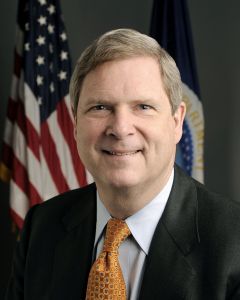
Vilsack

Tom Vilsack is Biden’s pick for Agriculture Secretary according to Politico, though a formal announcement hasn’t been made yet. Vilsack has already served in that role under Obama, and advised on rural and agriculture policy during Biden’s campaign. 

He is definitely not a wild-eyed reformer. I suppose that means he’d be easier to get confirmed, easier for everyone in Washington to work with, and completely unlikely to curb Big Ag in any serious way.

This 2012 article in the Washington Monthly was brought up in an online farming group to remind people of who Vilsack is. It’s long. In brief, it details how anti-trust laws were reinterpreted during the Reagan era to make it easier for large companies to buy each other out. One result was growing concentration in agriculture, to the detriment of small, independent farmers. This has been a tremendous change and is ongoing. During Vilsack’s tenure as Obama’s Secretary of Agriculture, he led a doomed effort to reign in the power of Big Ag.

By November 2011, it was clear that the reformers had lost. … The most ambitious, far-reaching campaign to reform the agricultural industry in forty years was over, less than two years after it had begun.

Obama’s Game of Chicken

If it’s major reform we’re looking for (I am), Vilsack is probably not the best person to count on. And, by the way, David Scott, the new chair of the House Agriculture Committee, is also mentioned unflatteringly in the Washington Monthly article as one of a group who opposed the reforms.