County Committees have deep roots
The US Department of Agriculture’s Farm Service Agency had its origins (under another name) in the 1930s as part of an effort by the US Department of Agriculture (USDA) to help farmers during the Great Depression. County committees of farmers have been a significant means for the agency to keep in touch with farmers on the ground since very early in that effort–so for nearly a century.
… and they matter
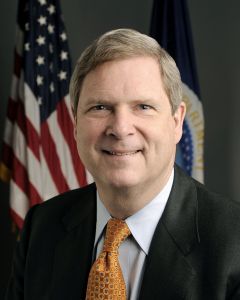
Today I listened to part of a hearing to review the state of Black farmers in the U.S. in which members of the House Agriculture Committee questioned Tom Vilsack, Biden’s Secretary of Agriculture. He also served as Secretary under Obama. One of the questions was from Alma Adams, a Democratic representative from North Carolina.
“What do you think might account for the steep drop in direct farm loans to Black producers and what steps is the USDA willing to take to increase that participation?” she asked.
Secretary Vilsack led off his reply by saying: “We have to have people in the Farm Service Agency offices and in the County Committees that reflect the population that they serve. When I was Secretary the last time, I did for the first time ever appoint minority members to County Committees that did not have minority membership. I think it’s important that we take a look a that County Committee structure.”
From this I draw the conclusion that County Committees matter.
Urban ag committees are born
That brings me to the most recent iteration of the Farm Bill in 2018. (There’s a new one every five years, more or less. I guess the Soviets weren’t the only ones enamored of five year plans.) It includes a pilot program to test the concept of County Urban Agriculture Committees. This was part of a larger plan to respond to the hitherto neglected topic of urban agriculture. By now there should be 10 of these pilot programs, but so far as I know, there are only 6, and none of them is in California. Will they create more? Will one be in Los Angeles?
Will Los Angeles get a committee?
I called our local Farm Service Agency (FSA) in Lancaster. Oddly no one in the Farm Service Agency there knew what I was talking about, but they eventually referred me to the National Resource Conservation Service (NRCS), another USDA agency with whom they share office space. The NRCS woman I spoke to was very helpful. I mean, really, she was great. But her answer on the question about urban ag committees was that they’re a pilot program run out of Washington, so no one local knows much about them. She, too, would love to see a committee formed in Los Angeles, but her take was it’s up to the guys in D.C.
Then I found an email address on a flyer having to do with the urban committees, so I shot off a quick note. I got a response from a USDA office in Puerto Rico. Why Puerto Rico? I have no idea. Certainly not because my correspondent there was a fount of useful information. The most germane tidbit he had to offer was the email address of someone else he said could provide more information on the off chance I was still curious.
I was.
So I emailed contact number 3, who turns out to work on county urban ag committees for the NRCS. Now I’m thinking that even though the ag committees for everyone else are handled out of the Farm Services Agency, the pilot for the urban ag committees is the National Resource Conservation Service’s baby, which, I suppose, is why my question to the Farm Service Agency in Lancaster was referred to the NRCS.
Why would the NRCS be running county urban ag committees when all the original county ag committees are under FSA’s umbrella? I’m guessing it’s because, after all, urban farms aren’t real farms, right? In farming circles, small farms are sometimes referred to, rather dismissively, as hobby farms, and hobby farms are not always taken very seriously by real farmers. I see their point, but from my perspective small farms have one very big factor making them interesting — they’re hotbeds of innovation. Urban farms suffer, though, not only from being small, but also urban. Maybe that’s more than the FSA can wrap its mind around? But that’s another story.
And my email to Washington? It’s been two weeks and I’m still waiting, but I’m guessing the guy is pretty busy. Maybe tomorrow, or next week. Better late than never.
Maybe Vilsack will know!
That brings me to an email invite I got a couple of days ago to a “teletownhall” with American Farmland Trust President and CEO John Piotti talking to Agriculture Secretary Tom Vilsack. When I registered to attend, the site gave me the opportunity to submit a question, so I did. I asked if they’d be forming any new county urban agriculture committees and, if so, was there any chance Los Angeles would get one.
I’m not sure where to turn next if he doesn’t have a satisfying answer, but I’ll think of something. Never say die.
Update (4/14/21)
There were over 5500 people in attendance at the teletownhall with Secretary Vilsack; my question wasn’t among the chosen. Most of what he said wasn’t of great interest to me, but one point caught my attention. A caller asked if we could farm sustainably and still produce enough food for export. My sense was that the caller imagined sustainable farming would mean the end of industrial agriculture. Vilsack’s answer seemed to be that we could keep doing what we’re doing (industrial ag), but tweak it enough to be sustainable without sacrificing production. Maybe I’m reading too much into his comments, but I’m not looking to Vilsack to launch the crusade against concentration in agriculture that I’d like to see. He’s also keen on some kind of carbon bank, a means by which money would be collected from GHG emitters (a carbon tax?) and then doled out to farmers who engaged in carbon sequestering practices.
 City Farm Policy